
Achieving centimetre-level GNSS accuracy relies on the use of real-time corrections. Professionals have two main options: subscribing to an RTK/NRTK network managed by a specialist provider, or installing their own fixed base station and operating independently. While having your own base station may seem appealing on paper, particularly for financial reasons, it comes with technical and operational risks that should be carefully considered before taking the plunge.
How does an RTK base station work?
A fixed RTK antenna (or RTK base station) is a reference station permanently installed at a point with precisely known coordinates. The base station continuously broadcasts its satellite observations and known coordinates. The GNSS receiver combines this information with its own measurements to calculate a centimetre-level position.
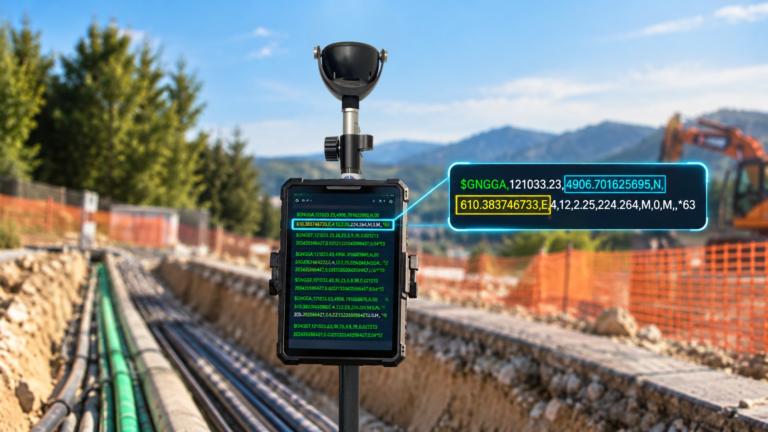
Corrections from an RTK base station are most commonly transmitted over the internet using the NTRIP protocol (Networked Transport of RTCM via Internet Protocol). The base station continuously sends its data to a server, known as a caster, which GNSS receivers connect to in order to receive the corrections. The entire process therefore depends on the network infrastructure, which must be configured correctly: a stable, permanent internet connection, along with a properly configured router and firewall.
A correction is only valid if it is recent. GNSS receivers display the "age of corrections", meaning the time elapsed since they were transmitted. A slow or unstable connection causes these corrections to become outdated, reducing positioning accuracy and potentially resulting in the loss of the centimetre-level solution. Installing your own base station therefore also means taking responsibility for a small network infrastructure, with all the technical expertise and ongoing monitoring that entails.
Reliability of positioning accuracy
An RTK base station does not provide an "absolute" position. It transmits correction information based on its own reference coordinates. The receiver therefore determines its position relative to the base station. If the base station's coordinates are incorrect, all measured positions will be shifted by the same amount and in the same direction.
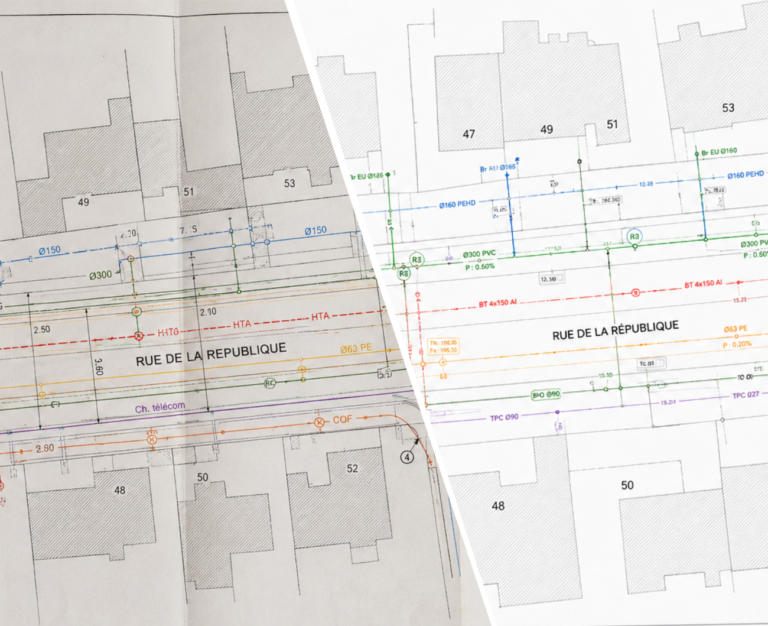
This is what makes the error particularly difficult to detect: the surveys remain internally consistent. Distances and shapes measured on a construction site appear correct. The offset only becomes apparent when these surveys are overlaid with other data, such as utility network plans, cadastral maps, surveys carried out by another company, or measurements taken later using an RTK network.
Unlike a professional RTK network, where reference stations are continuously monitored and their coordinates regularly recalculated, a self-installed base station offers no guarantee of long-term positional stability.
Maintenance
An RTK base station is an active piece of equipment exposed to outdoor conditions 24 hours a day, 7 days a week. Power supply, connectivity, weather protection and component ageing are all factors that require regular maintenance. A power outage, network failure or hardware malfunction can interrupt the correction service without warning, potentially bringing operations on the construction site to a standstill.
Technical dependencies
Configuring an RTK base station is not a straightforward task. It requires advanced technical expertise: entering accurate known coordinates, configuring the correction transmission protocol (NTRIP), managing correction settings and ensuring compatibility with the GNSS receivers connecting to it. The base station and connected equipment are mutually dependent: changing a GNSS receiver, updating firmware or encountering a protocol incompatibility can render the entire system inoperative.
Furthermore, the reference system itself evolves: the French National Institute of Geographic and Forest Information (IGN) publishes new realisations of the RGF93 reference system. The base station must be kept consistent with these developments. This requires geodetic expertise and rigorous traceability, including records of inspection dates, coordinates used and maintenance operations performed. With a professional RTK network, this responsibility lies with the network operator.
Limited coverage
A fixed RTK base station only covers a limited area around its installation point. The distance between the base station and the receiver is one of the factors that can affect positioning quality. Differential positioning relies, in particular, on using a reference station close enough for both receivers to observe satellite signals under similar conditions. The further the GNSS receiver moves away, the more the correction accuracy deteriorates. This is known as the baseline effect. However, this degradation is gradual and may go unnoticed by the user: there is no automatic real-time warning that positioning accuracy is deteriorating. As a result, surveys may be carried out under the assumption of centimetre-level accuracy, while the actual positioning error has reached several centimetres without the user being aware of it.
A professional NRTK network, by contrast, relies on a network of reference stations that continuously calculate corrections adapted to the GNSS receiver's position, wherever it is located within the coverage area.
Syslor's recommendation
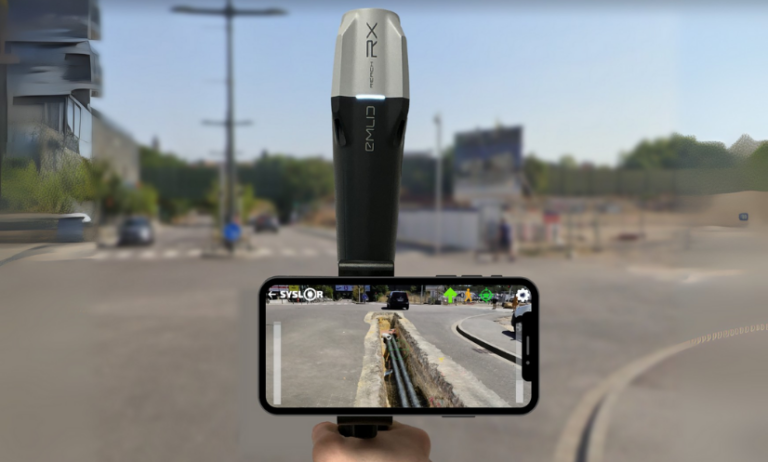
Syslor's Proteus GNSS receiver is compatible with fixed RTK base stations: if you already have your own base station, Proteus can connect to it. However, Syslor recommends using an NRTK network operated and maintained by specialised professionals.
Specialist providers such as Orphéon, Satinfo, Premium Positioning and Teria operate dense networks of reference stations that are continuously monitored and regularly recalculated. They provide extensive coverage, consistent positioning accuracy across the territory and technical support when needed. This is the approach we recommend to our customers: it makes surveys more reliable, simplifies field operations and ensures dependable positioning accuracy over time.
Need advice on choosing your RTK subscription? Our team can help you select the solution best suited to your business and your projects.